AI cancer cures slowed by chip shortage, says UK's biggest tech boss
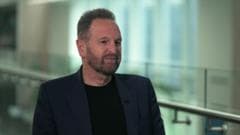
Image caption, Rene Haas was previously on the board of British pharmaceutical giant AstraZeneca
8 min read
Executive DigestOriginal Reporting by BBC News World
This is a curated overview of the story reported by BBC News World. Full text remains copyright of the publisher.
Read Full Story on BBC News World →
Rene Haas was previously on the board of British pharmaceutical giant AstraZeneca
- Published
The boss of the biggest UK-headquartered tech firm has said that artifical intelligence will find a cure for cancer that humans cannot in our lifetimes.
Rene Haas, chief executive of Cambridge-based chip designer Arm Holdings, said while modelling how a DNA marker is impacted by cancer was currently "too complex" a problem, computers are "going to solve it" in the future.
Haas also told the BBC that AI would lead to widespread humanoid robots in the next five years, but that its current rapid growth was being held up by a shortage of chips needed to build data centres.
However, he was sceptical about the idea chips could be manufactured in the UK in the future.
Arm designs the brains or CPUs of microchips already used in hundreds of billions of phones, cars, smartwatches and gadgets across the globe.
Earlier this summer, the company's peak share price amid the AI boom made it, in cash terms, the most valuable UK-based company in history.
Haas, who stepped down from the board of British pharmaceutical giant AstraZeneca in April, told the BBC's Big Boss Interview podcast: "AI is going to... find a cure for cancer that today you and I, other humans [could] not in our lifetimes. I believe in our lifetime, AI will help cure cancer.
"Modelling a cell, modelling a human, modelling how a DNA marker is impacted by cancer - it's too complex a problem, not only for humans today, but the computers that run AI.
"However, going forward, as we feed more and more of the models into these computers, and the computers get more sophisticated to run the models, they're going to solve it," said Haas, who also holds a key role in Arm's main owner, the Japan-based Softbank, which has a range of investments in tech including in OpenAI.
Prof Chris Bakal, from the Institute of Cancer Research, London, and CEO of Sentinal4D, said the real question was no longer whether we use AI, it's what we feed it.
He said in labs like his, they are training AI on data generated themselves from patient samples.
"It is not scraped from the internet. It does not need a giant data centre to run. The future of medical AI will not belong to whoever builds the biggest computer. It will belong to whoever has the right measurements.
"That kind of prediction could cut years from the time it takes to develop new treatments. This is where AI delivers real benefit to patients."
Job losses 'overstated'
In a wide-ranging interview, Haas said the chips Arm designs would fuel self-learning AI robots "in a very large way" in manufacturing, cleaning, security, building bridges, and doing repairs within a decade.
"With artificial intelligence, these robots can see, learn, and essentially be reprogrammed for new tasks. So, in the service industry, the robot that was programmed to make a bed can also learn how to arrange the towels in a room, or clean the dustbins, or whatever you want to go off and do."
Addressing concerns that AI would lead to mass job losses, Haas said while there would be some change for workers, "the estimates of jobs going away and being completely replaced by machines is a bit overstated" and outweighed by new opportunities.
He also said fears over a correction in the remarkable rise in the stock market value of AI companies were overstated, because of the long-term demand for AI.
Arm's power-efficient technology was now being used in half of AI data centres worldwide, he said.
This has led to a significant evolution in its business in recent months, selling its own microchips. Facebook-owner Meta asked Arm to develop the Arm AGI chip and "demand has been off the charts", according to Haas, with more than $2bn worth of demand since it was launched in March.
Big Boss Interview: Arm Holdings Rene Haas
The CEO of chip design company Arm tells the BBC AI will help cure cancer, lead to widespread humanoid robots in the next five years, but says its rapid growth is being held up by a shortage of chips needed in data centres.
There have, however, been challenges in the supply of many types of chips, which Haas believes is holding back the roll-out of AI and data centres.
He pointed to plans for massive "multi-gigawatt" data centres in France and the US as well as plans to put them in space.
"We are absolutely in a supply-constrained environment. Can you get enough chips? We need more fabs [chip factories] before we can put a data centre in space."
But he does not believe that manufacturing, currently centralised around Taiwanese giant TSMC, could eventually occur in the UK, despite the government holding talks with the industry about the possibility of bringing parts of the physical chip supply chain over here.
"I don't think it's necessary for the UK to [build] fabs. Fabs are very expensive. They take a lot of specialised workers. They take a lot of natural resources, and there's a pretty broad ecosystem for those."
As the great hope of UK tech for decades, some government ministers have lamented Arm's sale to Japanese investors in 2016 and subsequent partial flotation on New York's Nasdaq rather than in London.
But Haas maintained that half of Arm's employees remain in the UK and said the company was "by far and away the largest employer in Cambridge".
- Published13 hours ago

- Published27 August

- Published28 January


230
Related Articles

The Guardian World·16h ago·World
Australian politics live: NSW One Nation leader clarifies anti-abortion comments; Joyce compares Hanson’s Indigenous comments with melon-gate
Follow the day’s news liveGet our new political email, free app or daily news podcastSports precinct funding report reveals a ‘pattern of behaviour’, Wilson saysTim Wilson says there are questions for Labor to answer over an ABC report which says health minister Mark Butler’s office asked an Adelaid…

The Guardian World·16h ago·World
Queenslanders’ rights to oppose mining projects ‘gutted’ by new laws, activists say
As minister says process needs to be ‘streamlined’, Greens and Lock the Gate say the legislation is ‘corrupt’ and tears up environmental protectionsGet our breaking news email, free app or daily news podcastQueenslanders’ right to object to mining projects – including coal – would be “gutted” by new…

The Hindu International·17h ago·World
U.S. acknowledgement of orbital arms ignores space conflict consequences: Russia
Foreign Ministry spokesperson said resolutions co-authored by Russia on barring deployment of space-based weapons and transparency in using space would be presented to the U.N. General Assembly next month

BBC News World·17h ago·World
Five takeaways from Canada's push to woo the world's richest investors
A $1tn sales pitch, more than 160 projects on offer, pivot to the EU amid a bitter trade war with the US - takeaways from the first Canada Investment Summit.