APOD: 2026 September 7 – The Pelican Nebula in Gas, Dust, and Stars
5 min read

⚖️
Open Journalism · PUBLIC_DOMAIN
Published under PUBLIC_DOMAIN by NASA
APOD
Astronomy Picture of the Day
Discover the cosmos! Each day a different image or photograph of our fascinating universe is featured, along with a brief explanation written by a professional astronomer.
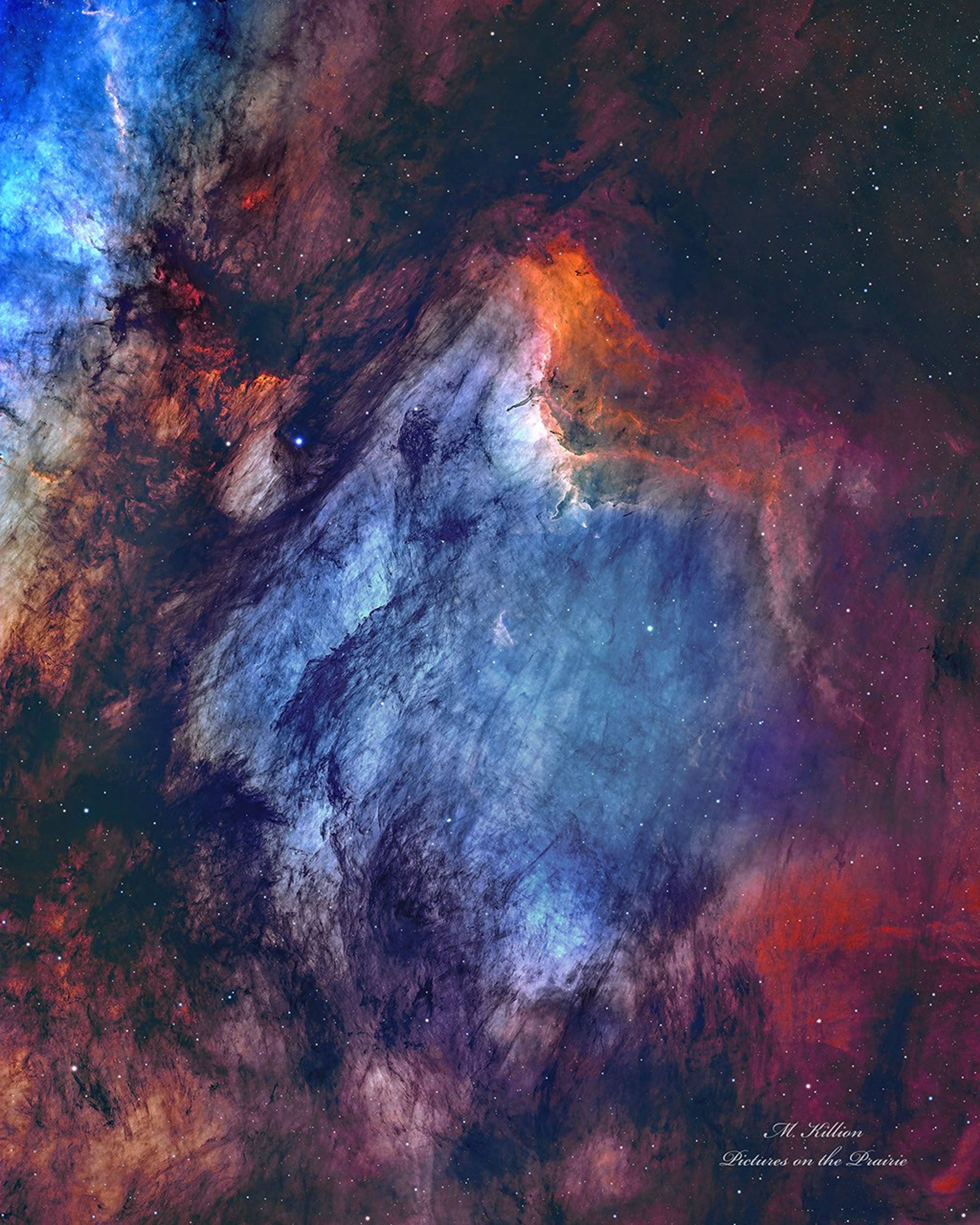
The Pelican Nebula in Gas, Dust, and Stars
Explanation: The Pelican Nebula is slowly being transformed. IC 5070 (an official designation) is divided from the larger North America Nebula by a molecular cloud filled with dark dust. The deep featured picture from Utah, USA incorporates 25 hours of exposure and brings out great details of this filamentary dust. The Pelican Nebula receives much study because it is a particularly active mix of star formation and evolving gas clouds. The light from young energetic stars is slowly transforming the cold gas to hot gas, with the advancing boundary between the two, known as an ionization front, visible in bright orange on the upper right. Particularly dense tentacles of cold gas remain. Millions of years from now, the Pelican Nebula, bounded by dark nebula LDN 935, might no longer be known as the Pelican, as the balance and placement of stars and gas will surely leave something that appears completely different.
APOD’s main site is moving: From apod.nasa.gov to science.nasa.gov/apod
Tomorrow’s picture: geometric Saturn
| Date: | September 7, 2026 |
|---|---|
| Credit & Copyright: | Mark Killion |
| Authors & editors: | Robert Nemiroff, Jerry Bonnell, Cecilia Chirenti, Keighley Rockcliffe |
| A service of: |
ASD at NASA / GSFC, NASA Science Activation & Michigan Tech. U. |
80
Related Articles

Phys.org·16h ago·Science
High-resolution weather data could pinpoint neighborhoods facing greatest heat stress
Heat stress is a leading cause of weather-related deaths and can be especially dangerous in cities, where phenomena like urban heat islands drive temperatures higher than in surrounding rural areas. Now, a new dataset developed by the U.S. National Science Foundation National Center for Atmospheric…

Phys.org·17h ago·Science
New species of 240-million-year-old prehistoric animal could reshape dinosaur origins timeline
A new prehistoric animal species from Tanzania dating to around 240 million years ago, during the Triassic period, has been described by an international team of researchers. Led by the University of Bristol, the new species, named Dinodontosaurus isiyavamanda, could help scientists refine the age o…

Phys.org·17h ago·Science
Weather forecasts are significantly less accurate in poorer countries, analysis finds
Weather forecasts inform countless everyday decisions—from farmers deciding when to sow crops and energy companies anticipating demand to public authorities preparing for heat waves. But how useful those forecasts are depends considerably on where people live.

Phys.org·17h ago·Science
Young, eco-anxious Canadians are the most likely to support disruptive tactics by environmental activists, study finds
The tolerance of individual Canadians for radical forms of environmental activism depends on several factors. Overall, however, Canadians do not support vandalism or violence as forms of protest. Those are the key findings of a new study by researchers from McGill University and Université Laval. Th…