Today
Global EditionS&P 5005,983.99▲ +0.42%
NASDAQ19,281.40▲ +0.55%
FTSE 1008,422.10▲ +0.28%
NIKKEI38,642.91▲ +0.78%
BTC91,420.00▲ +1.85%
CRUDE OIL72.40▼ -0.35%
GOLD2,680.50▲ +0.15%
S&P 5005,983.99▲ +0.42%
NASDAQ19,281.40▲ +0.55%
FTSE 1008,422.10▲ +0.28%
NIKKEI38,642.91▲ +0.78%
BTC91,420.00▲ +1.85%
CRUDE OIL72.40▼ -0.35%
GOLD2,680.50▲ +0.15%
Lula v congress: Brazil’s re-elected leader faces environmental battle
9 min read
The climate agenda was largely absent from the campaigns of the two candidates in the 2026 Brazilian elections.
But just after his re-election for a fourth term on Sunday, Luiz Inácio Lula da Silva made clear his intention to transform Brazil into a developed country by investing in the green, digital and creative economies. “We will show the world how climate policies are handled in this country,” he pledged. In his previous term, the incumbent made it a priority to bring Amazonian deforestation to the lowest levels since 1988, when records began.
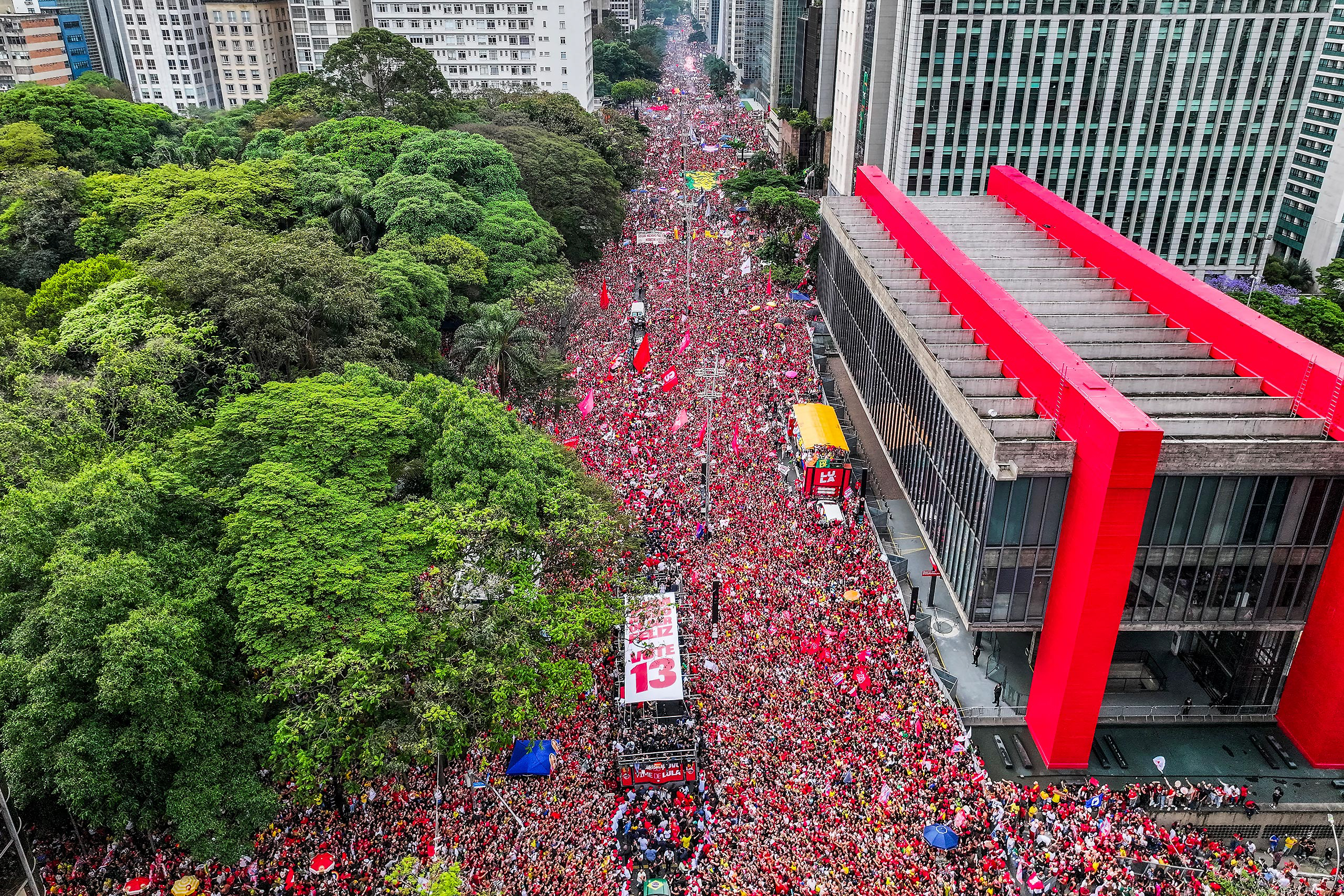
Lula’s unlikely victory against Flávio Bolsonaro – who won the first round of voting with 47% in early October – was supported by an historic mobilisation on the streets and social media. It is a setback for the far right in Brazil, which has embraced climate change denial.
Two million Lula supporters took to the streets of São Paulo on 24 October, the eve of the presidential election runoff. Historic mobilisation on the streets across the country and on social media proved a setback for the far right (Image: Daniel Frias / Mídia NINJA, CC BY NC)
However, conservative, pro-agribusiness lawmakers have secured a large majority in congress during these elections. Experts warn this could make it difficult for Lula to achieve his environmental targets.
During his third term, Lula reversed the upward trend in deforestation across Brazil’s main biomes. He also reduced the country’s greenhouse gas emissions rate, and rebuilt environmental and climate governance following four years of dismantling under the previous president, Flávio’s father Jair.
On Monday, the Netherlands announced a contribution of USD 500 million to a forest protection fund launched by Lula at COP30 in Brazil last year. It was an early sign of the international backing for his fourth term’s environmental vision.
André Guimarães, executive director of the Amazon Environmental Research Institute (Ipam), tells Dialogue Earth that the Dutch announcement is a result of Lula’s international “credibility”.
The Brazilian president has already confirmed his participation in COP31 this November, which takes place in Antalya, Türkiye. But experts interviewed by Dialogue Earth believe Lula needs to go beyond simply continuing the fight against deforestation to fulfil the country’s potential for environmental and climate leadership. Despite his environmental credentials, Lula has faced criticism for his enthusiastic support for oil and gas exploration in the Amazon basin.
According to Liuca Yonaha, vice-president of Brazilian climate policy think-tank the Talanoa Institute, Lula’s fourth term could serve as an unprecedented opportunity to rethink the country’s economic model. She also thinks his administration needs to lay out a clear timetable for transitioning away from fossil fuels: “It is, perhaps, the first time that we as a nation have the opportunity to think, with a wider range of people included, about the path of development we want to take.”
Overcoming congress
In his first statement following his victory, Lula said Brazil’s legislators had not been chosen by him but by the people, and that he would work with parliament to vote on and approve policies. But many of those legislators could prove a thorn in the side of any environmental agendas.
Brazil’s position as one of the world’s major exporters of agricultural commodities such as soybeans, corn and livestock results in significant economic dependence on the sector. Agriculture remains the main driver of the destruction of native vegetation.
Around seven in 10 parliamentarians in the new legislature are opposed to the socio-environmental agenda, according to analysis by the Climate Observatory, Brazil’s largest coalition of environmental organisations.
Most parliamentarians in Brazil’s next legislature oppose a social-environmental agenda
Source: Climate Observatory • Data is based on the Environmental Convergence Index (ICAt) from the Farol Verde platform, run by the Institute for Democracy and Sustainability, which assesses the alignment of legislators’ votes with the socio-environmental agenda, taking into account in particular the average index score per party (Very Low: 0–25 %; Low: 26–50 %; Good: 51–69 %; Very Good: 70–100 %). The legislature’s term runs from 2027 to 2030.
With a strong anti-environmental bias, Flávio Bolsonaro’s Liberal Party (PL) will have the majority of seats in the Chamber of Deputies. But the situation is worse in Brazil’s senate, where his party has claimed an even bigger share and will be the largest parliamentary group from February 2027, with 29 of the 81 seats.
Dialogue Earth consulted Suely Araújo, the Climate Observatory’s public policy coordinator and former president of the federal environmental enforcement agency, the Brazilian Institute of the Environment and Renewable Natural Resources (Ibama). Araújo says the majority of elected parliamentarians deny the importance of environmental policies, viewing them as a “barrier to be cleared”. A 2026 Climate Observatory survey finds there are more than 40 bills currently awaiting approval that target protected areas, either to prevent the creation of new zones or to shrink existing ones.
Araújo has also identified an acceleration in the trend of relaxing mining regulations, particularly on Indigenous lands. This process, underway during Lula’s third term, is being driven by the supreme court and congress.
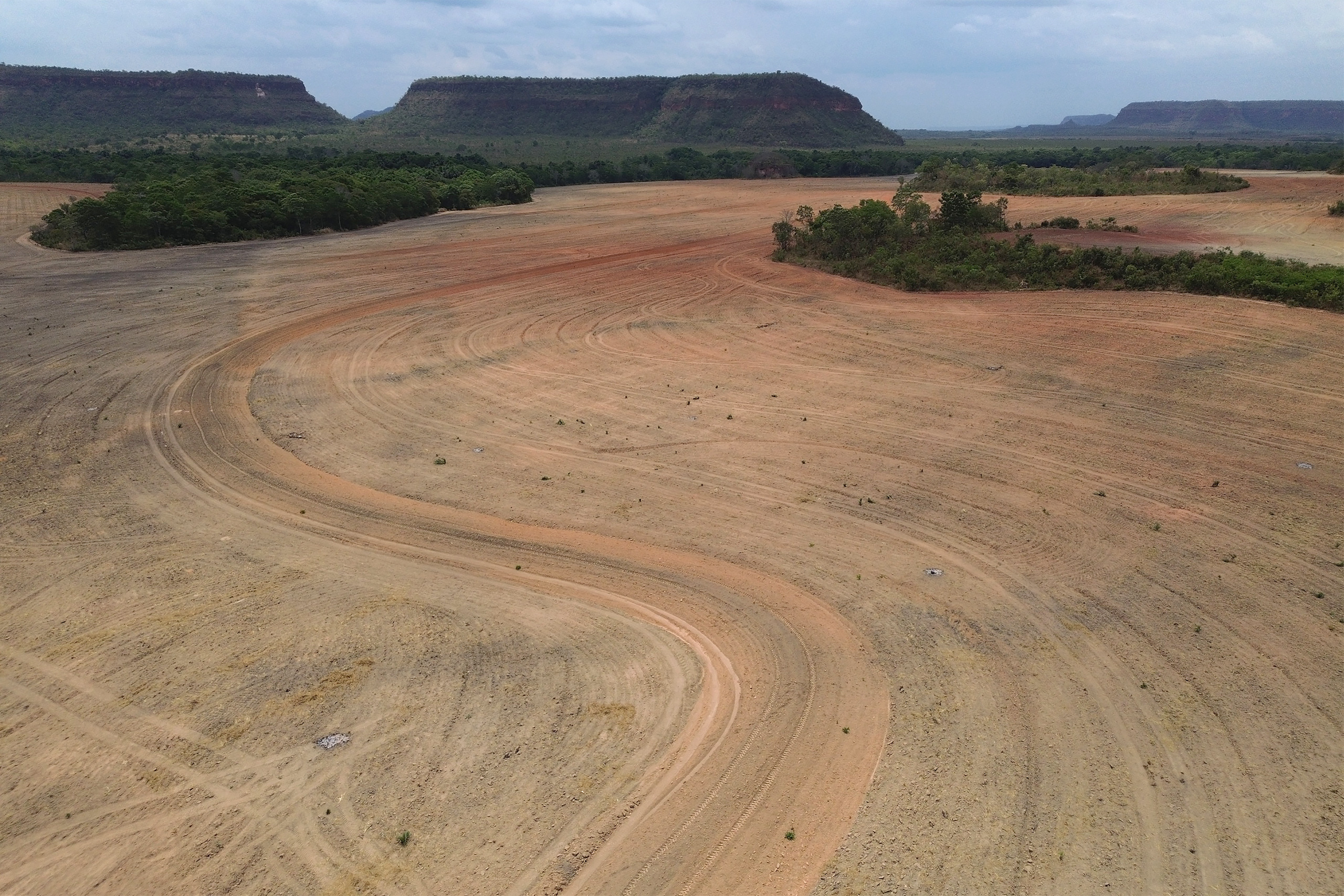
Soya crops expand into Cerrado vegetation in Maranhão state, north-east Brazil. Bills are advancing in congress that aim to weaken enforcement of regulations against deforestation and on the protection of such biomes (Image: Fernando Frazão / Agência Brasil)
Other bills aim to weaken the enforcement of regulations against deforestation, the legal duty to conserve a percentage of native vegetation on private land, and the protection of non-forest biomes such as the Cerrado. A new environmental licensing law, which has standardised and relaxed regulations across the country, was also passed by congress last year despite opposition from Lula’s government. The new ruling is viewed by experts as potentially harmful to the environment, particularly as it facilitates the approval of large-scale developments – such as data centres or major construction projects – with fewer requirements and a shorter assessment period.
Overall, says the Climate Observatory, these attacks could hamper the government’s environmental coordination efforts, and jeopardise Brazil’s target of achieving zero deforestation by 2030.
The end of oil and gas?
Despite advocating for a phaseout of fossil fuels at COP30, Lula’s government continued to invest in further oil exploration. But it also developed programmes to promote renewable sources (Brazil has enormous potential for wind and solar power) and biofuels.
One year ago, the Lula administration authorised oil and gas exploration in the Amazon Estuary, an environmentally sensitive region with strong sea currents. The licensing process had dragged on for more than a decade due to the technical complexity of the decision. And in August this year, Brazil’s majority state-owned oil company Petrobras made its first oil discovery announcement for the basin, in “ultra-deep” waters off the coast of Amapá. Brazil is already the primary oil producer in Latin America, and seventh globally; production has been increasing over the past decade.
Meanwhile, Brazil’s roadmap for its fossil fuel phaseout has yet to materialise since COP30.
Guimarães believes this contradiction reflects a period of global transition. But he still considers Lula to have failed his commitment to the environment by supporting the opening of new oil exploration fronts: “Brazil, given the role it has assumed on the global stage and the credibility it has built by reducing deforestation and returning to lead the climate agenda, [should] not do this. We should be more consistent.”
Others are more positive. Araujo says: “[The country] can be a global example, as it has been previously, and is now returning to that position with these deforestation figures and the reduction in emissions.”
Support from the streets
Lula’s campaign was buoyed by a huge popular movement in the weeks between the first and second rounds of voting – more than 10 million people reportedly joined a WhatsApp channel dedicated to securing his re-election. Harnessing this support could be key to overcoming opposition in congress and environmental policymaking, experts say.
“Young people took to the streets in this second round; they do not want to see their heritage destroyed,” Guimarães says. “The socio-environmental sector will have to count heavily on public participation; we will have to join forces with the street protests to provide some counterbalance to congress. The good news is that, apparently, the younger generations are taking the reins of the future, which needs forests remaining standing.”
Lula has used the environmental agenda to restore the country’s leading role on the international stage. His new term represents both an opportunity and a responsibility for this work to continue.
“At this time of crisis for multilateralism, the result gives Brazil’s voice greater weight and a certain authority in multilateral forums,” says Yonaha. “It does not mean it will be easy, but we must make the most of this opportunity to bring climate ambition to these forums and lead by example.”
The post Lula v congress: Brazil’s re-elected leader faces environmental battle appeared first on Dialogue Earth.
20
Related Articles

NASA·21h ago
65 Years of Human Spaceflight at NASA Johnson
NASA astronaut Randy Bresnik, ESA (European Space Agency) astronaut Luca Parmitano, former NASA astronaut Russell “Rusty” Schweickart, and NASA astronauts Frank Rubio and Bob Hines appear onstage at the Artemis Celebration Gala at the Kennedy…

NASA·1d ago
APOD: 2026 November 22 – Swirls and Colors on Jupiter from Juno
APODScienceAPODAPOD: 2026 November 22 –…Today’s APODArchiveSubmissionsIndexSearchCalendarRSSEducationAboutDiscuss APOD Astronomy Picture of the Day Discover the cosmos! Each day a different image or photograph of our fascinating universe is featured, along with a brief explanation written by a profe…
Futurity·1d ago
Why forest fires often break out at the same time across Europe
A new study reveals the weather patterns that trigger simultaneous forest fires across multiple regions in Europe. Firefighting aircraft, helicopters, fire brigades—when forests across Europe are burning at the same time, the limited firefighting resources have to be allocated efficiently, and ideal…

Futurity·1d ago
Different winegrape types react similarly to drought
Winegrape growers have long sought varieties that can better withstand dry climates and deficit irrigation. But new research from scientists at Washington State University suggests that a grapevine’s variety may matter less than previously thought when it comes to drought tolerance. “Our results go…