On this day in space! Sept. 5, 1977: NASA launches Voyager 1 on epic journey across the solar system
On Sept. 5, 1977, Voyager 1 began its epic journey through deep space with a glorious morning launch from Cape Canaveral, Florida.
4 min read

Executive DigestOriginal Reporting by Space.com
This is a curated overview of the story reported by Space.com. Full text remains copyright of the publisher.
Read Full Story on Space.com →On Sept. 5, 1977, Voyager 1 began its epic journey through deep space with a glorious morning launch from Cape Canaveral, Florida.
Voyager 1 initially launched on a mission to explore the outer planets. After flying by Jupiter and Saturn in 1979 and 1980, the spacecraft took a sharp turn and started heading straight out of the solar system.
Voyager 1 became the first spacecraft to reach interstellar space in 2012, although scientists are still debating about exactly where that boundary lies.
The spacecraft's next big encounter will take place in about 40,000 years, when it will fly by another star system. And just in case it comes across any intelligent life out in the universe, it's carrying a golden record with sights, sounds and greetings from planet Earth.
Why it mattered
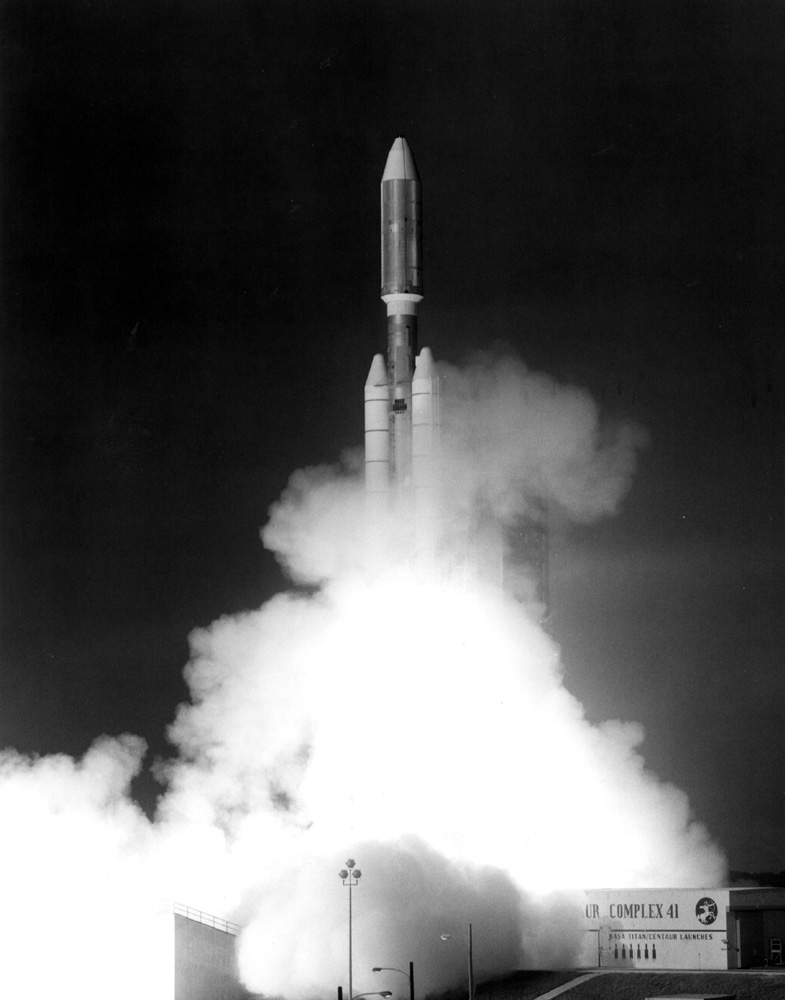
Voyager 1 is a space exploration icon and NASA's ultimate long-lasting mission.
The spacecraft was part of a two spacecraft mission (Voyager 2 launched a few weeks earlier) to explore the outer solar system like never before. While Voyager 2 launched on a four-planet "Grand Tour" of the solar system, a trajectory that included flybys of Jupiter, Saturn, Uranus and Neptune, it wasn't the fastest of missions.
Voyager 1 launched on a fast-track to Jupiter. In fact, the probe actually overtook Voyager 2 on the way to Jupiter and arrived their first for a flyby in March 1979. A year later, in November 1980, Voyager 1 passed by Saturn in a flyby that shot it out of the solar system.
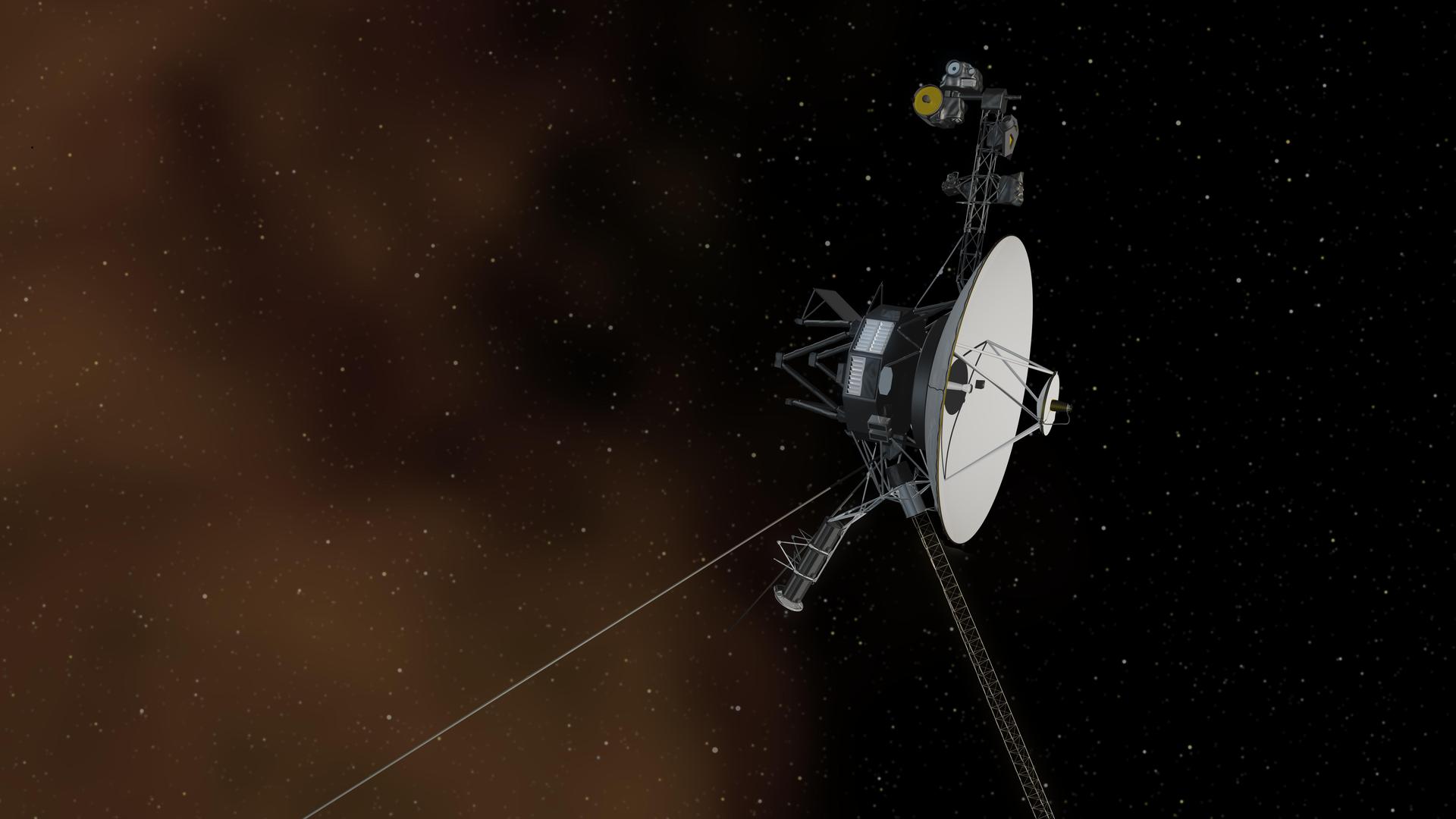
By Feb. 17, 1998, Voyager 1 grabbed the record as the farthest human-built object after it flew farther than Pioneer 10 and in 2012, the spacecraft became the first probe ever to enter interstellar space. It remains NASA's farthest flung mission still active today.
Today, Voyager 1 is 15.9 billion miles (171.6 astronomical units) from Earth and still flying. Even 49 years after launch, the spacecraft is still collecting some data, but its nuclear radioisotope thermoelectric generator does not produce as much power as it did at launch, so NASA teams have steadily shut down heaters and unneeded instruments over the decades.
Earlier this year, on April 17, NASA commanded Voyager 1 to shut down its low-energy charged particles experiment to save power. For nearly 50 years, the instrument has provided constant measurements on the ion, electron and cosmic ray environment in deep space.
Want more space history? Check out our full On This Day In Space Story archive and watch our On This Day In Space videos on YouTube.
00
Related Articles

Phys.org·16h ago·Science
High-resolution weather data could pinpoint neighborhoods facing greatest heat stress
Heat stress is a leading cause of weather-related deaths and can be especially dangerous in cities, where phenomena like urban heat islands drive temperatures higher than in surrounding rural areas. Now, a new dataset developed by the U.S. National Science Foundation National Center for Atmospheric…

Phys.org·17h ago·Science
New species of 240-million-year-old prehistoric animal could reshape dinosaur origins timeline
A new prehistoric animal species from Tanzania dating to around 240 million years ago, during the Triassic period, has been described by an international team of researchers. Led by the University of Bristol, the new species, named Dinodontosaurus isiyavamanda, could help scientists refine the age o…

Phys.org·17h ago·Science
Weather forecasts are significantly less accurate in poorer countries, analysis finds
Weather forecasts inform countless everyday decisions—from farmers deciding when to sow crops and energy companies anticipating demand to public authorities preparing for heat waves. But how useful those forecasts are depends considerably on where people live.

Phys.org·17h ago·Science
Young, eco-anxious Canadians are the most likely to support disruptive tactics by environmental activists, study finds
The tolerance of individual Canadians for radical forms of environmental activism depends on several factors. Overall, however, Canadians do not support vandalism or violence as forms of protest. Those are the key findings of a new study by researchers from McGill University and Université Laval. Th…