On this day in space! Sept. 6, 1947: The US Navy launches 1st V-2 rocket at sea in ballistic missile test
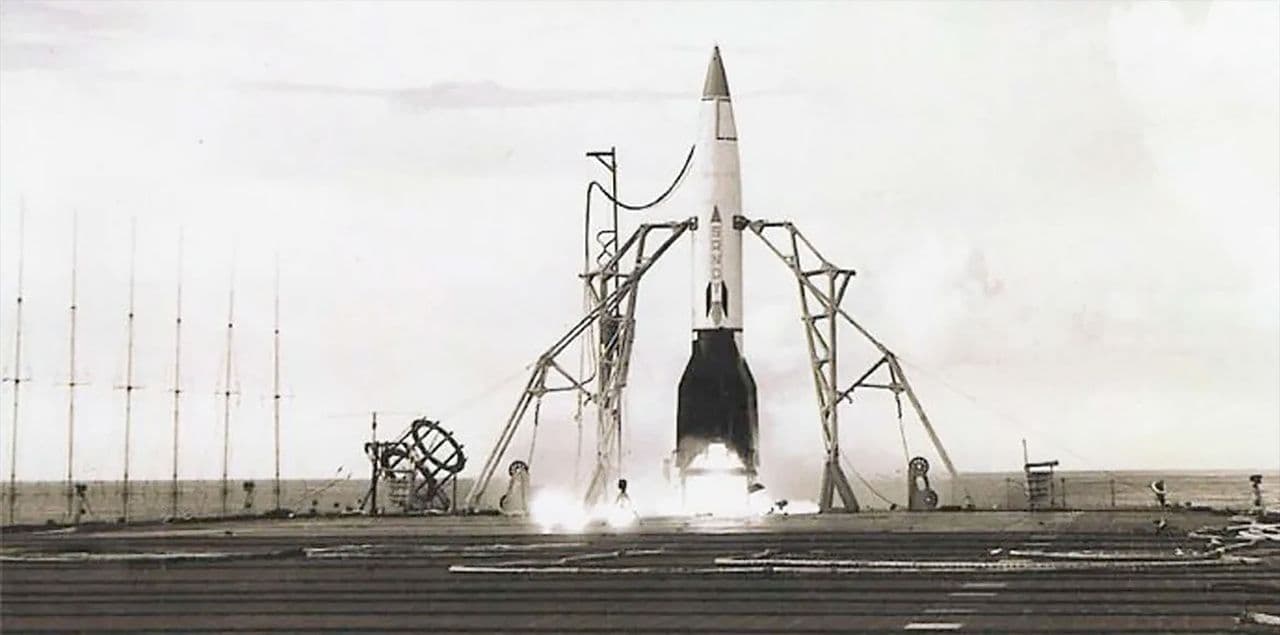
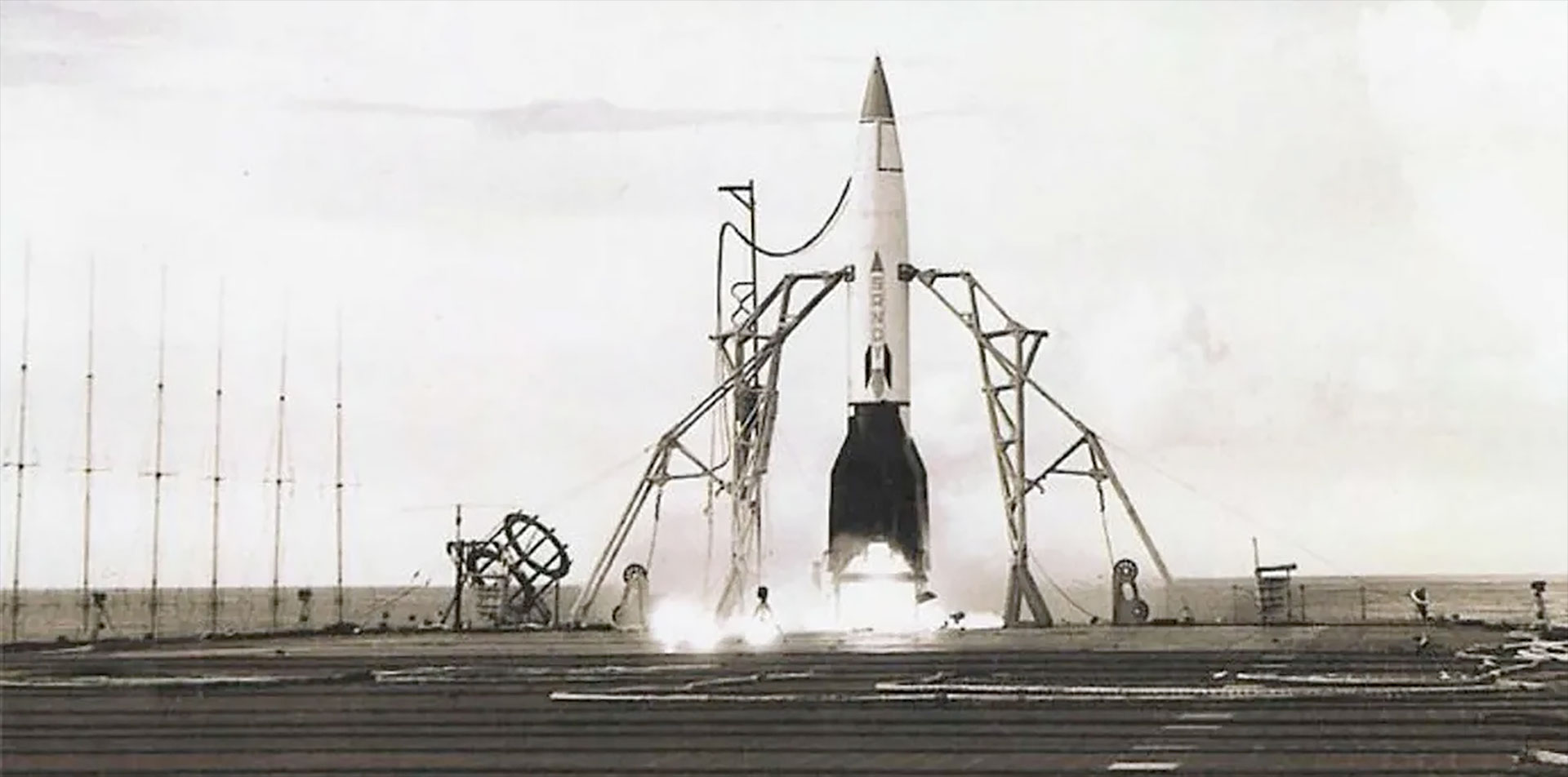
On Sept. 6, 1947, a rocket launched from an aircraft carrier for the first time. The V-2 rocket was captured from a German manufacturing site by the Allied forces at the end of World War II.
4 min read
Executive DigestOriginal Reporting by Space.com
This is a curated overview of the story reported by Space.com. Full text remains copyright of the publisher.
Read Full Story on Space.com →On Sept. 6, 1947, a rocket launched from an aircraft carrier for the first time. The V-2 rocket was captured from a German manufacturing site by the Allied forces at the end of World War II.
V-2s were the world's first long-range guided ballistic missile. They were designed by German rocket scientist Wernher von Braun, a famous aerospace engineer, invented them for Nazi Germany before he was secretly moved to the U.S. and started working for NASA. Von Braun and the seized V-2 missile parts were brought to the White Sands Missile Range in New Mexico, where the scientists assembled the parts and began experimenting with launches.
The first V-2 to launch at sea blasted off from a U.S. Navy ship called the USS Midway in a mission titled "Operation Sandy." The aircraft carrier sailed a few hundred miles south of Bermuda for the launch. After liftoff, the V-2 started tilting midair and only made it to an altitude of 15,000 feet (4,600 meters) before falling back to Earth.
Why it mattered
Rockets may be great for space exploration, but the technology's roots are firmly embedded in military applications, with the V-2 rocket standing out as a clear example.
The rocket was designed as a military weapon first and foremost, and it was U.S. military's push to secure such tech that led to Operation: Paperclip, which secreted Von Braun and many other German aerospace scientists out of Germany at the end of World War II.
Operation: Sandy marked the first ballistic missile launch by the U.S. Navy, but today the such missiles are a standard part of the arsenal of some ships. That all started with the 1947 test flight. It also marked a step forward in U.S. missile technology, which would later evolve into orbital rockets just over a decade later.
While the V-2 rocket that launched from the USS Midway veered off course and began to break apart at an alttude of about 12,000 feet, according to MidwayCurrents.org, it did prove the concept of a missile launch at sea.
Want more space history? Check out our full On This Day In Space Story archive and watch our On This Day In Space videos on YouTube.
70
Related Articles

Phys.org·16h ago·Science
High-resolution weather data could pinpoint neighborhoods facing greatest heat stress
Heat stress is a leading cause of weather-related deaths and can be especially dangerous in cities, where phenomena like urban heat islands drive temperatures higher than in surrounding rural areas. Now, a new dataset developed by the U.S. National Science Foundation National Center for Atmospheric…

Phys.org·17h ago·Science
New species of 240-million-year-old prehistoric animal could reshape dinosaur origins timeline
A new prehistoric animal species from Tanzania dating to around 240 million years ago, during the Triassic period, has been described by an international team of researchers. Led by the University of Bristol, the new species, named Dinodontosaurus isiyavamanda, could help scientists refine the age o…

Phys.org·17h ago·Science
Weather forecasts are significantly less accurate in poorer countries, analysis finds
Weather forecasts inform countless everyday decisions—from farmers deciding when to sow crops and energy companies anticipating demand to public authorities preparing for heat waves. But how useful those forecasts are depends considerably on where people live.

Phys.org·17h ago·Science
Young, eco-anxious Canadians are the most likely to support disruptive tactics by environmental activists, study finds
The tolerance of individual Canadians for radical forms of environmental activism depends on several factors. Overall, however, Canadians do not support vandalism or violence as forms of protest. Those are the key findings of a new study by researchers from McGill University and Université Laval. Th…