Today
Global EditionS&P 5005,983.99▲ +0.42%
NASDAQ19,281.40▲ +0.55%
FTSE 1008,422.10▲ +0.28%
NIKKEI38,642.91▲ +0.78%
BTC91,420.00▲ +1.85%
CRUDE OIL72.40▼ -0.35%
GOLD2,680.50▲ +0.15%
S&P 5005,983.99▲ +0.42%
NASDAQ19,281.40▲ +0.55%
FTSE 1008,422.10▲ +0.28%
NIKKEI38,642.91▲ +0.78%
BTC91,420.00▲ +1.85%
CRUDE OIL72.40▼ -0.35%
GOLD2,680.50▲ +0.15%
Sport and in-person gaming used to help tackle loneliness among boys and young men
11 min read
Press release
Sport and in-person gaming used to help tackle loneliness among boys and young men
- The Connections Through Gaming pilot will use in-person gaming clubs to reach boys at risk of isolation
- Funding will also expand Sport Cares’ Offload programme to new areas, building on successful pilots that boosted young people’s wellbeing, confidence and aspirations
Boys and young men will be given new opportunities to build friendships, interact with healthy role models, and find their place in their communities, thanks to new Government backing for sport and gaming projects that tackle male loneliness.
Today the Government announces a £1.3 million investment in two programmes designed to reach boys and young men at risk of loneliness or isolation, including those who may be less likely to engage with youth services.
The three-year investment will use the power of shared interests in sport and in-person gaming to help boys and young men connect with others in their community, while accessing support from healthy role models and trusted adults. It will help protect against harmful online influences by reinforcing that toxic online cultures are no match for the sense of connection that can be found through shared interests and positive experiences in their communities.
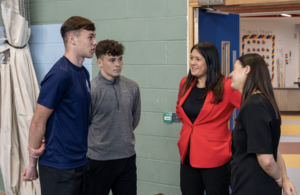
The announcement comes on International Men’s Day as the PM met Andy’s Man Club to hear how welcoming, face to face spaces are helping men build connections, talk openly and find support. Their work reflects the Government’s wider drive to tackle loneliness among boys and men by creating more opportunities to connect with others in their communities.
Culture Secretary Lisa Nandy MP said:
Too many young men today are struggling with loneliness and isolation, struggling to build friendships and find the support they need. When young people can’t find a sense of belonging where they live, they’re vulnerable to finding it on the internet from the people who promise cheap solutions to really difficult problems.
Through the power of sport, gaming and shared interests, we can bring boys and young men together, helping them feel connected and showing them that there is a whole community behind them.
More than £740,000 will fund a new three-year Connections Through Gaming pilot that will support boys aged 11 to 16. Using structured, in-person gaming clubs, trained youth workers and a safe, moderated online space, it will give boys opportunities to connect with others, build confidence and develop positive relationships as they play age-appropriate games. Details of these clubs and their locations will be set out in due course.
While gaming will provide a familiar way for boys to come together, face-to-face activities and trusted adult support will remain at the heart of the programme. Online activity will take place in a password-protected, actively moderated environment. This will help engage boys who may face barriers to participating in group activities in a safe, controlled space, while allowing participants to stay connected. There will be no public lobbies, open matchmaking or communication with unknown players.
More than £600,000 will expand Sport Cares’ Offload programme into 10 additional areas, which will be confirmed soon. It will build on successful DCMS-funded pilots in Wigan and Wakefield, which engaged 1,300 participants between November 2025 and March 2026. The project - which is expected to reach a further 1,800 participants - is run by trained current and former professional athletes who will teach boys and young men aged 16 to 24 about positive mental health and open up conversations about loneliness. It will also offer sport participation opportunities and promote team-building.
An independent evaluation of the pilots in Wigan and Wakefield by Edge Hill University found positive impacts on participants’ social connections, sense of belonging, wellbeing, resilience and aspirations, including improvements in confidence and emotional regulation. Participants also reported growing in confidence, with one saying they had become”more talkative”, while another described the programme as “lads getting together, getting to know each other, creating bonds”.
DCMS will monitor the impact, helping build evidence on how sport, gaming and trusted relationships can tackle loneliness and reach young people who might otherwise miss out on support.
The announcement also recognises the vital role of community organisations, including Andy’s Man Club, in providing welcoming spaces where men can talk openly, build friendships and find support.
Loneliness Minister Vicky Foxcroft MP said:
There isn’t one answer to tackling loneliness. We need to find different ways to reach young people, especially those who might find it difficult to make social connections or ask for support.
Whether through a local football club or a shared love of gaming, these programmes will give boys and young men a way in, helping them take that first step towards feeling more socially connected.
The Pilot Programme we ran in Wigan and across Wakefield last winter confirmed the power of sport to provide support and inspiration to boys and young men at such an important stage of their lives, helping them to get on and stay on a positive path.
We’re delighted to have this endorsement and investment from Government as we finalise plans for a major expansion of our work next year.
Notes to editors:
- The announcement is being made on International Men’s Day, Thursday 19 November 2026. The UK theme for this year’s International Men’s Day is Supporting Men and Boys.
- The £1.3 million investment comes from DCMS’s Social Connection, Isolation and Loneliness budget and will run over three years.
- The combined investment comprises:
- £608,208.33 for Sport Cares over three years.
- Approximately £744,000 for the Connections Through Gaming pilot and independent evaluation.
- The two programmes share the overarching aim of improving social connection among boys and young men, particularly those experiencing or at risk of loneliness and isolation.
Connections Through Gaming
- The pilot will test whether gaming can be used as a route to engage boys aged 11 to 16 experiencing loneliness, isolation or social withdrawal.
- Trained youth practitioners will provide trusted adult support, helping participants build confidence, develop relationships and access wider opportunities.
- All online activity will take place within a closed, invitation-only, verified and actively moderated environment. There will be no public lobbies, open matchmaking, public livestreaming or communication with unknown users outside the programme environment.
- DCMS will commission an independent evaluation to assess the effectiveness of the pilot and build the evidence base on how gaming and related activities can help strengthen social connections and wellbeing.
Sport Cares
- DCMS previously invested more than £330,000 to fund Rugby League Cares to deliver pilot programmes in Wigan and Wakefield between November 2025 and March 2026.
- The pilots engaged 1,300 participants.
- An independent evaluation by Edge Hill University found positive impacts on participants’ social connections, belonging, wellbeing, resilience and aspirations.
- Rugby League Cares has recently changed its name to Sport Cares to reflect the growing reach of its organisation.
- The new investment of up to £608,208.33 over three years will support the expansion of Sport Cares’ Offload programme and help develop its workforce and partnerships.
- More than 1,800 boys and young men aged 16 to 24 are expected to engage with Offload over the funding period.
- Offload is a six-week targeted behaviour change programme designed to increase awareness of loneliness and isolation and improve participants’ wellbeing, confidence and aspirations.
- DCMS funding will support the delivery of Offload in 10 additional areas of England over the funding period.
60
Related Articles
GOV.UK Official Announcements·8h ago
PM meeting with Prime Minister Jetten of the Netherlands: 21 November 2026
Press release PM meeting with Prime Minister Jetten of the Netherlands: 21 November 2026 From: Prime Minister's Office, 10 Downing Street and The Rt Hon Andy Burnham MP Published: 21 November 2026 The Prime Minister met Rob Jetten, the Prime Minister of the Netherlands, today in Amsterdam. The Prime…

Global Voices·13h ago
Growing up displaced in Cameroon after ten years of conflict
Over 223,700 children have dropped out of school in Cameroon’s Northwest and Southwest regions, while 2,463 schools are non-operationalOriginally published on Global VoicesA general view of Buea's OIC Market in the Southwest Region of Cameroon, where displaced families sell goods to support their li…
Washington State Standard·14h ago
Retiring Deputy House Leader Larry Springer reflects on legacy, warns Democrats on spending
Deputy Majority Leader Rep. Larry Springer on the set of Inside Olympia with Austin Jenkins. (TVW)After 22 years in the Washington House, retiring Deputy Majority Leader Larry Springer is closing a legislative career marked by advocacy for small businesses, charter schools and wildfire prevention, a…
Read story→
Iowa Capital Dispatch·17h ago
Midwest is ‘less red than maybe we assumed,’ Politico columnist says
Jonathan Martin, Politico’s politics bureau chief and senior political columnist, speaks to reporters ahead of the opening lecture of the Lost Region Recovery Project Conference in Sioux Falls, South Dakota, on Nov. 20, 2026. (Photo by Makenzie Huber/South Dakota Searchlight)SIOUX FALLS — The blue w…
Read story→