The Helicopter with Radioactive Blades
Sometimes you find gold in unexpected places. In this case, it’s from a video about the CH-53 helicopter. The CH-53 Sea Stallion first entered service in 1966. It’s a huge helicopter, capable of lifting immense amounts of weight. All that weight hangs from 6 (or 7 on some models) rotor blades. The problem was det
3 min read

Executive DigestOriginal Reporting by Hackaday
This is a curated overview of the story reported by Hackaday. Full text remains copyright of the publisher.
Read Full Story on Hackaday →
Sometimes you find gold in unexpected places. In this case, it’s from a video about the CH-53 helicopter. The CH-53 Sea Stallion first entered service in 1966. It’s a huge helicopter, capable of lifting immense amounts of weight. All that weight hangs from 6 (or 7 on some models) rotor blades. The problem was detecting problems with the blades before they grew into a catastrophic failure.
Much like a fixed-wing aircraft wing, the CH-53 rotor blades are designed with a spar as the main structural 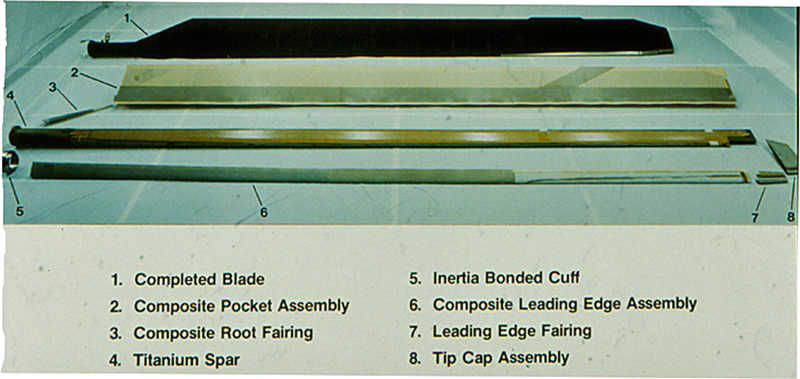 member. On early designs, the spar was extruded aluminum. The CH-53D and other variants moved to cold-formed titanium.
All of these blades shared the same problem – detecting tiny cracks in the metal before they grow into blade failure. Detecting cracks turned out to be rather easy. The blades are sealed and pressurized with nitrogen gas. Cracks allow the gas to leak out. A barber pole pressure indicator on the blades allows mechanics to tell at a glance if everything is ok.
That’s all fine and good on the ground, but if a blade begins cracking in the air, the pilots want to know about it immediately. What was needed was something akin to the tire pressure monitoring system on modern cars. A pressure sensor that would turn on a light in the cockpit. Modern automotive TPMS systems use wireless sensors inside the tire. In the early 60’s though, electronic components were not reliable enough to survive rotating on a helicopter blade. Wiring the sensors through the spinning rotor head using slip rings would be incredibly complex. Expecting wireless electronic components to survive life in a rotorhead would be even more problematic.
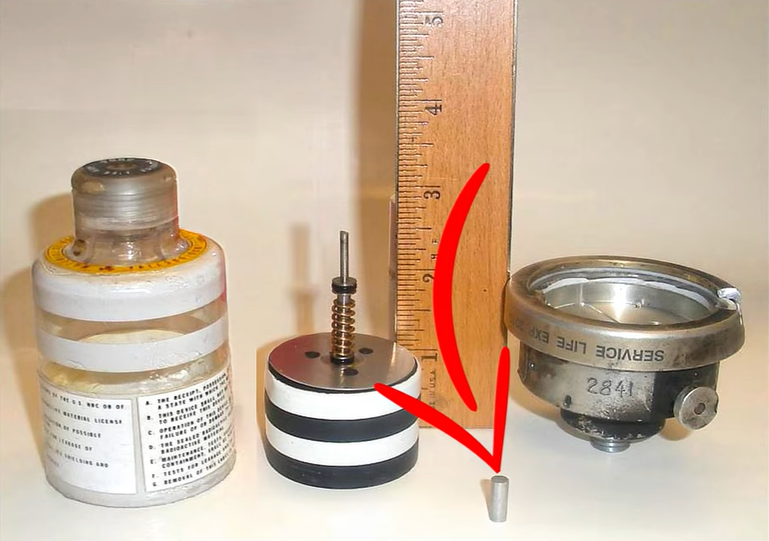
The solution turned out to be simple: Throw a little ionizing radiation into the mix. Called IBIS, short for Inflight Blade Monitoring System keeps the CH-53 safe. The magic happens in the same pressure indicator we mentioned earlier. Rather than just a shift from a green to a barber pole indication, the IBIS module also exposes a tiny amount of radioactive Strontium-90. The Strontium is a beta emitter, meaning its radiation can be detected by a Geiger counter inside the helicopter. It’s also relatively safe for humans as long as they don’t eat or breathe it in. No batteries, no electronics on the rotor blade. It’s a simple mechanical solution to a difficult problem.
The solution is so elegant it’s still being used today. The newest versions of the CH-53 of fiber optics to detect faults in the newest all-composite blades. The older variants? They’re still going with the nuclear option.
40
Related Articles

TechRadar·16h ago·Technology
Salesforce has built the TSA a new AI agent to make travelling less awful for everyone
Salesforce has revealed Ace, a new AI agent for the TSAAce should take the pressure of answering basic questions off human agentsAce has already resolved 96% of basic inquiries so farSalesforce has built the Transportation Security Administration (TSA) a new AI agent to try and help streamline trave…

Engadget·16h ago·Technology
Considering a Level 2 EV charger? How to know if you need one
Charging your EV from home is cheap and convenient, but knowing which type of charger will get the most out of your electric car can often be confusing.

TechRadar·16h ago·Technology
Nvidia RTX 5090 GPU prices skyrocket to $9,000 — as fresh RTX 6000 rumor suggests a 2027 launch that fills me with dread
Nvidia's RTX 5090 is now over $9,000 in the USA new rumor suggests that RTX 6000 gaming GPUs are coming in 2027, maybe in the first half of the yearIf true, the price tag that's attached to the RTX 6090 will likely be colossal, and lower-tier GPUs could be pricey tooNvidia's RTX 5090 flagship has hi…

9to5Mac·16h ago·Technology
India escalates Apple probe over alleged iOS 18 issues that incurred repair costs
India’s Central Consumer Protection Authority (CCPA) has reportedly escalated its probe into whether Apple should be held responsible for an iOS 18 update that allegedly caused display and microphone issues on some iPhones. Here are the details. more…