This Week In Space podcast: Episode 226 — Who Owns The Moon?
On Episode 226 of This Week In Space, Rod Pyle and Tariq Malik are joined by Dr. Rainer Zitelmann to discuss the history of capitalism and how it applies to our future in space.
4 min read

Executive DigestOriginal Reporting by Space.com
This is a curated overview of the story reported by Space.com. Full text remains copyright of the publisher.
Read Full Story on Space.com →On Episode 226 of This Week In Space, Rod Pyle and Tariq Malik are joined by Dr. Rainer Zitelmann to discuss the history of capitalism and how it applies to our future in space.
Capitalism — and a strong profit motivation — has driven enterprise for centuries. Two notable examples are the East India Company and the US transcontinental railroad, and the various tycoons who built it. In neither case, by today's standards, were the operations fair or ethical on a number of fronts. Can we do better in space?
Zitelmann joins us to discuss capitalism and the importance of extraterrestrial land ownership as an enabler of human expansion off-Earth. He's got a lot to say, and not all of it is what you might expect. Join us for this fascinating and informative look at one business case for newspace.
Download or subscribe to this show at: https://twit.tv/shows/this-week-in-space.
Get episodes ad-free with Club TWiT at https://twit.tv/clubtwit
Space news of the week
- Liftoff! NASA's Roman Space Telescope soars to the stars on a SpaceX Falcon Heavy rocket in spectacular launch (video)
- 'No guts, no glory': How I captured NASA's Roman Space Telescope cross the sun on a picture-perfect SpaceX Falcon Heavy launch
- Blue Origin wins $700 million contract to build NASA's next Mars orbiter
- 'A new mission starting today': 8 years after launch, BepiColombo begins Mercury arrival
- rainer-zitelmann.com
- New Space Capitalism: The Entrepreneurial Path to the Stars (Amazon Affiliate Link)
Model Falcon 9!
TOP TELESCOPE PICK:
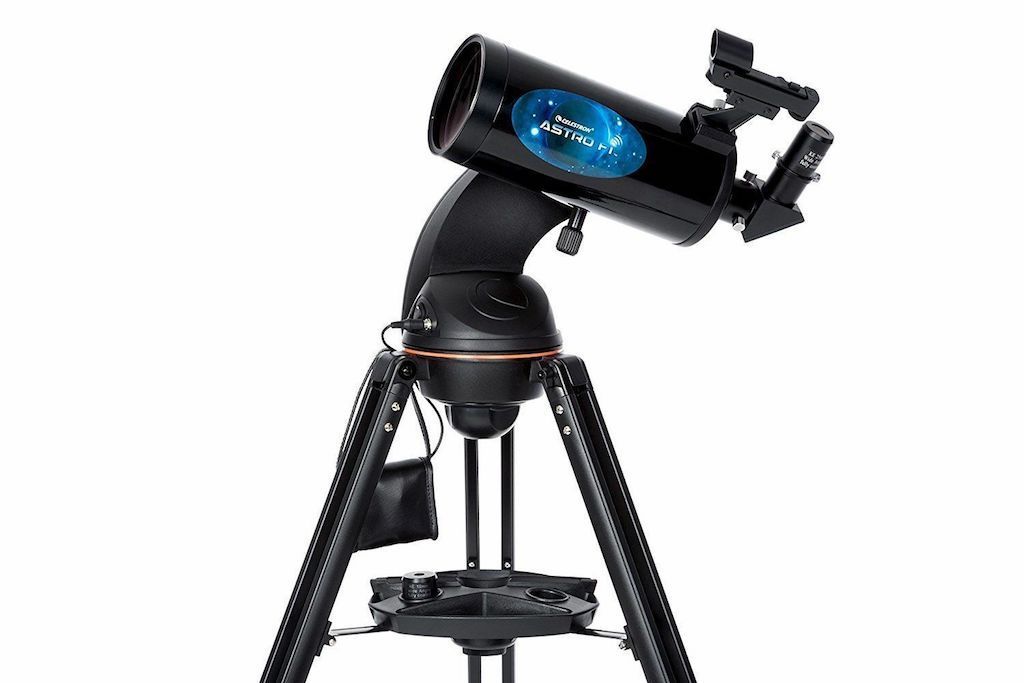
Looking for a telescope to see planets and comets? We recommend the Celestron Astro Fi 102 as the top pick in our best beginner's telescope guide.
Finally, did you know you can launch your own SpaceX rocket? Model rocket maker Estes' stunning scale model of a Falcon 9 rocket that you can pick up now. The launchable model is a detailed recreation of the Falcon 9 and retails for $149.99. You can save 10% by using the code IN-COLLECTSPACE at checkout, courtesy of our partners collectSPACE.com.
About This Week In Space
This Week in Space covers the new space age. Every Friday we take a deep dive into a fascinating topic. What's happening with the new race to the moon and other planets? When will SpaceX really send people to Mars?
Join Rod Pyle and Tariq Malik from Space.com as they tackle those questions and more each week on Friday afternoons. You can subscribe today on your favorite podcatcher.
00
Related Articles

Phys.org·16h ago·Science
High-resolution weather data could pinpoint neighborhoods facing greatest heat stress
Heat stress is a leading cause of weather-related deaths and can be especially dangerous in cities, where phenomena like urban heat islands drive temperatures higher than in surrounding rural areas. Now, a new dataset developed by the U.S. National Science Foundation National Center for Atmospheric…

Phys.org·16h ago·Science
New species of 240-million-year-old prehistoric animal could reshape dinosaur origins timeline
A new prehistoric animal species from Tanzania dating to around 240 million years ago, during the Triassic period, has been described by an international team of researchers. Led by the University of Bristol, the new species, named Dinodontosaurus isiyavamanda, could help scientists refine the age o…

Phys.org·17h ago·Science
Weather forecasts are significantly less accurate in poorer countries, analysis finds
Weather forecasts inform countless everyday decisions—from farmers deciding when to sow crops and energy companies anticipating demand to public authorities preparing for heat waves. But how useful those forecasts are depends considerably on where people live.

Phys.org·17h ago·Science
Young, eco-anxious Canadians are the most likely to support disruptive tactics by environmental activists, study finds
The tolerance of individual Canadians for radical forms of environmental activism depends on several factors. Overall, however, Canadians do not support vandalism or violence as forms of protest. Those are the key findings of a new study by researchers from McGill University and Université Laval. Th…